

You Filmed It, They Aired It: How to License Your Viral Video Without Getting Burned
A 2025 guide for citizen journalists on copyright, contracts, and getting paid for breaking news footage
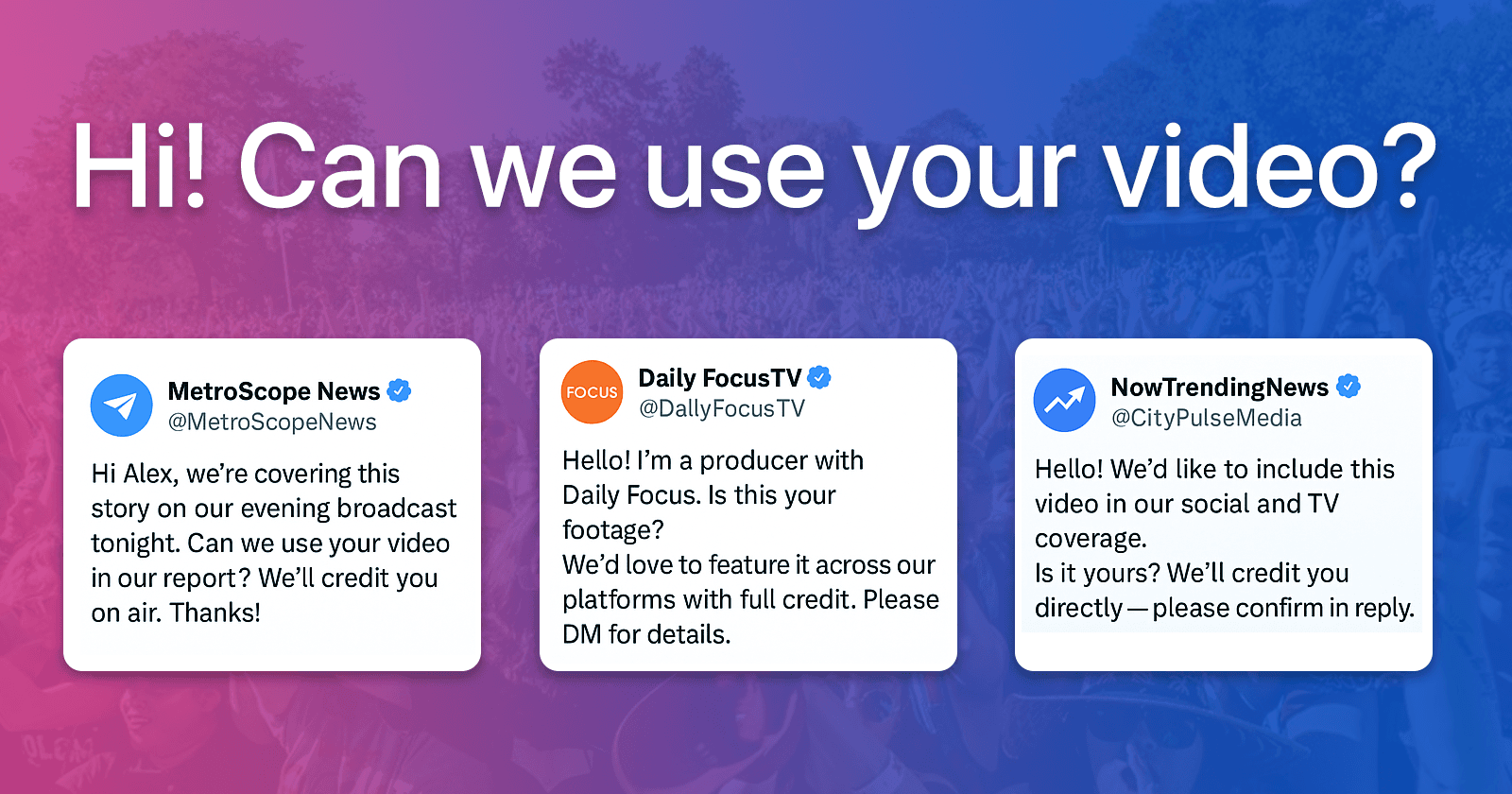
Your viral video is not just a post. It is intellectual property. In 2025, breaking news runs on citizen footage, from extreme weather to protests to public incidents with viral clips. That also means DMs from newsrooms, agencies, and random accounts will flood your inbox. Some will offer credit only. Others will ask for the file now and discuss money later.
This guide explains how to license your video, what terms to ask for, how to avoid common traps, and where POV fits in if you want clear terms and fast payouts.
Note: This article offers general information, not legal advice.
First principle: you own your clip
If you shot the footage, you almost always own the copyright the moment you hit record. In the United States, no registration is required to have copyright, though registration brings extra benefits if you ever need to enforce your rights. See the U.S. Copyright Office on copyright basics and registration benefits at copyright.gov.
Ownership is automatic at creation. You do not lose ownership simply because you posted the clip on social media.
Platform terms of service do not give newsrooms a free pass. When you upload to a platform, you grant the platform a license to host and display your content. That does not grant third parties the right to download and rebroadcast it elsewhere without permission. See YouTube’s licensing overview and Content ID help pages on support.google.com and X’s copyright policy at help.twitter.com for the platform-specific details.
You can sell nonexclusive licenses to multiple buyers. Most citizen journalists do this unless a newsroom pays extra for exclusivity.
If your clip includes copyrighted music, images, or someone else’s footage, things get complicated. You still own your original video, but you may not be able to license it for all uses if it contains third-party material. Avoid adding music overlays to newsworthy clips you plan to license.
What a fair license looks like
When a newsroom or brand wants to use your clip, you are not selling your copyright. You are granting a license that spells out exactly how, where, and for how long they can use it.
Key terms to define in writing:
License type. Nonexclusive or exclusive. Exclusive always costs more because it prevents you from licensing to others during the term.
Usage. Editorial use only, or editorial and promotional, or commercial advertising. Editorial means news coverage and documentaries. Promotional means the buyer can use your clip to market their own content. Advertising means your footage can appear in ads for unrelated products. Each step up should increase the fee.
Platforms and geography. TV broadcast, website, apps, social channels, OTT, in-venue screens. Domestic only or worldwide.
Duration. One-time, 30 days, 1 year, perpetual. Perpetual rights should carry a premium.
Edits and derivatives. Can they crop, add graphics, re-edit? Ask to be consulted for sensitive edits.
Credit. On-screen and in descriptions. Credit is not a substitute for payment, but it should be part of the deal.
Fee and payment timeline. Flat fee, day rate, or per second. Net 30 is common for invoices, but many outlets can pay faster if asked.
You do not need a 10-page contract. A short email agreement can be binding if it includes the terms above and both sides confirm in writing. For larger deals, ask for a simple license agreement or purchase order.
For newsroom best practices on contacting eyewitnesses and licensing, see the Online News Association’s Social Newsgathering Ethics Code at journalists.org and Poynter’s guidance on using user-generated content at poynter.org.
Red flags and common traps
A fast yes can protect you. A fast no can protect you too. Watch for these:
Credit only offers. Exposure does not pay rent. If you want to grant free rights, that is your call. But newsrooms and brands have budgets for licensing. A polite response like Thanks for the interest. I license my footage. Are you able to offer a fee for 30-day editorial use across TV and digital? often shifts the conversation.
Vague asks. We want to use your clip everywhere. Please send the original file. Get specifics before sending the master. Offer a watermarked preview or share the platform link until you have terms.
Impersonation. Scammers create fake accounts posing as producers. Verify email domains, check staff pages, or call a newsroom desk line before sending files. Legitimate producers will not object to verification.
The reply-to switch. Some emails use a legit-looking display name but a sketchy reply-to address. Read the headers.
Unlimited, perpetual, all-media, worldwide in exchange for a tiny fee. Negotiate scope and duration. If they truly need perpetual rights, charge accordingly or narrow it.
For trauma-informed outreach and why it matters when newsrooms contact eyewitnesses, see the Dart Center’s resources at dartcenter.org.
Pricing without guesswork
Rates vary by market, exclusivity, and the clip’s news value. While we will not set universal prices here, you can think about pricing in tiers and levers:
Value levers. Exclusivity, duration, number of platforms, and territories. Ask if the buyer truly needs all of them.
Editorial vs commercial. Editorial rates are usually lower than advertising usage. If a brand wants to use your clip in ads, that is a different deal.
Time-sensitive premium. Breaking news value decays fast. Early hours command higher fees. Time-boxed licenses like 7 or 30 days can be renewed later.
Bundles. If you have multiple angles or a longer reel, set a bundle price that beats buying one by one.
Avoid rate-shaming in public. Keep it professional. If you are unsure what to charge, ask the buyer for their standard rate for eyewitness video. Many will share a range.
Keep control of your master file
Before you have a signed license or a clear email agreement:
Do not send the full-resolution master. Provide the platform link or a watermarked preview.
Keep your raw files and metadata intact. They help prove authorship and verify the footage.
Store a clean, uncompressed copy offline. Cloud backups can fail, and your social account could be compromised.
If someone uses your footage without permission, you can send a polite invoice referencing your posted terms or a standard rate for similar usage. If that fails, consider a platform takedown request via DMCA and consult resources at the U.S. Copyright Office or creator advocacy groups.
How to say yes like a pro
Here is a simple email template you can copy:
Thanks for reaching out. I can license the attached video on a nonexclusive basis for editorial use across TV broadcast, website, apps, and social channels. Worldwide, 30-day term, standard credit to [Your Name]. Fee: [Your Fee], invoiced on delivery, Net 15. Please confirm and I will send a download link to the master.
If they need exclusivity, add: Exclusive for 24 hours from publication is available for an additional [Fee]. After that, license reverts to nonexclusive.
If they ask for perpetual rights, counter: Happy to discuss. What is the editorial need for perpetual rights? I can offer 30 days at [Fee] or 1 year at [Higher Fee]. Perpetual worldwide rights would be [Premium Fee].
Where POV fits in
If you prefer clear terms and faster payouts, consider using POV’s marketplace instead of juggling DMs.
Post a bounty for footage at a specific location and time. Describe what you need and what you will pay.
Others can walk into the bounty circle, record, and submit video.
You, as the bounty poster, pay for accepted clips. Creators get paid for real-world footage without negotiating dozens of one-off deals.
POV’s model gives both sides clarity. Requesters know what they are buying. Contributors know what they are selling. For sensitive stories, bounties can reduce cold outreach to eyewitnesses at vulnerable moments, aligning with ethical newsgathering practices recommended by groups like the ONA Social Newsgathering Working Group.
Credit, consent, and context
Even with a license, treat people fairly.
Always ask the original poster. Do not license from a reuploader unless you are sure they shot it or hold rights.
Credit by name and handle if they want it. Some contributors may ask for anonymity for safety reasons. Respect that, especially around protests or vulnerable communities.
Keep context intact. Do not edit the clip to mislead. Context collapse fuels misinformation, and trust is hard to rebuild. The Reuters Institute’s Digital News Report has repeatedly found that clear labeling and transparent sourcing help audiences assess credibility. See the 2024 report at reutersinstitute.politics.ox.ac.uk.
Can you still sell a clip that is already posted?
Yes. Posting to social does not prevent you from licensing your content. Most licenses are nonexclusive and time-limited. Two important caveats:
If you used a third party’s music or images, your licensing options narrow.
If you previously granted an exclusive license for a period, you must wait for that term to end before licensing elsewhere.
Creative Commons licenses are also an option, but choose carefully. CC licenses are generally irrevocable and may allow free reuse, including commercial use, depending on the variant. Read the Creative Commons license guide at creativecommons.org before you apply one to newsworthy footage you might want to sell.
What about filming people in public?
Rules vary by country, but in many places you can record in public where there is no reasonable expectation of privacy. Two reminders:
Ethical use goes beyond what is legal. Avoid naming private individuals without a clear public interest, and consider blurring faces in sensitive situations like minors, medical emergencies, or immigration enforcement.
Defamation and privacy laws still apply if a caption or edit implies false facts or reveals highly private information without public interest.
For a deeper dive on rights to record and ethical considerations, the Electronic Frontier Foundation and similar organizations publish practical guides at eff.org.
A quick checklist before you hit send
Confirm who you are dealing with by name, title, and company domain.
Get the key terms in writing: usage, platforms, duration, geography, fee, credit.
Decide on exclusivity and price it accordingly.
Share a preview, not the master, until terms are set.
Invoice promptly and track payment timelines.
Save every email and keep your original files safe.
Citizen journalists are no longer on the margins of news. You are in the middle of it. Owning your rights and licensing with clarity is not just about money. It is about agency, consent, and the kind of media ecosystem we build next.
📬 Be part of what’s next
POV is a citizen journalism app that turns everyday people into contributors. Post a bounty, request video from anywhere in the world, or walk into a bounty circle and get paid for your footage.
Learn more: https://pov.media
Sign up for early access: Subscribe to POV Stories
Follow us: @POVAppOfficial


